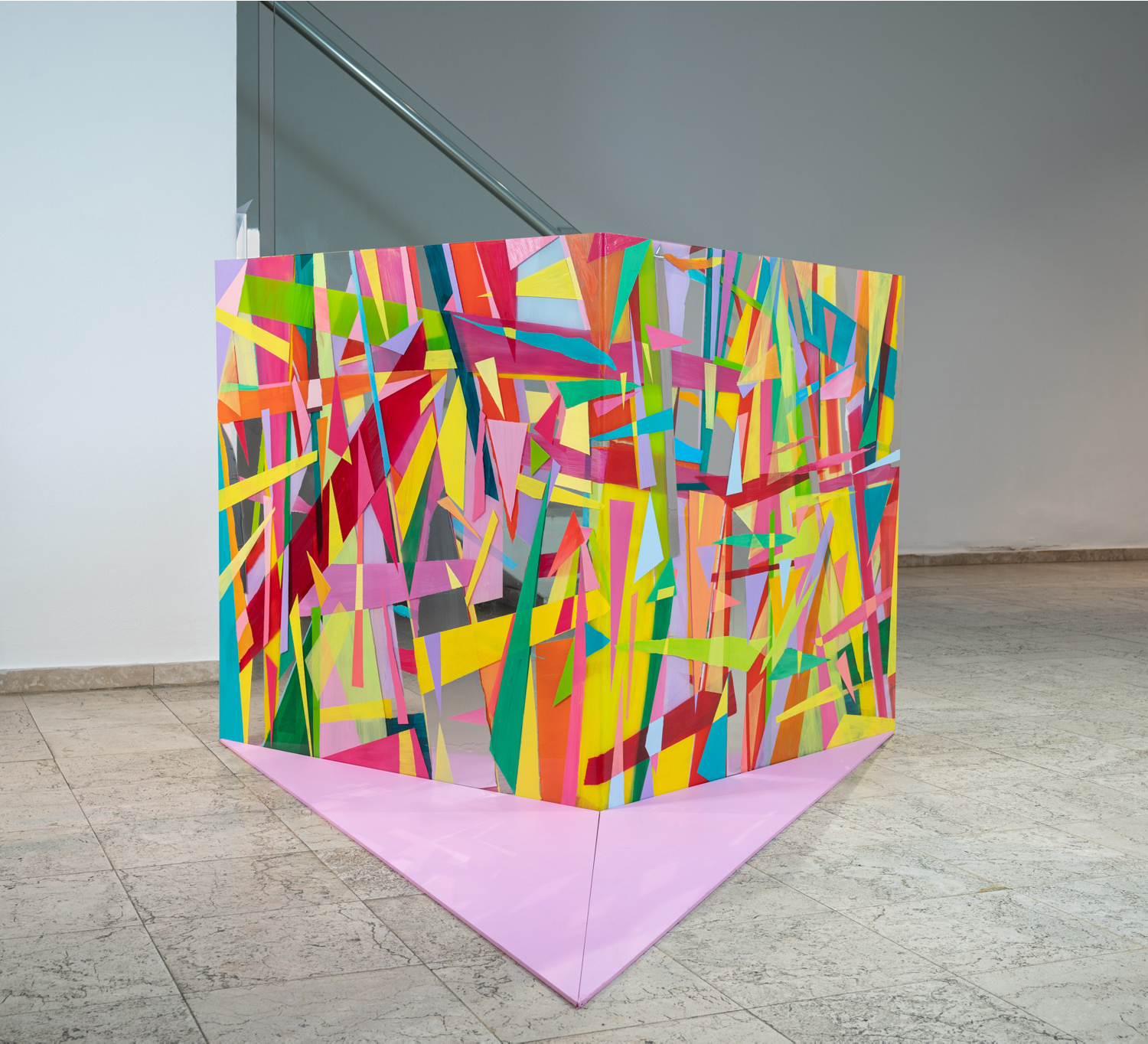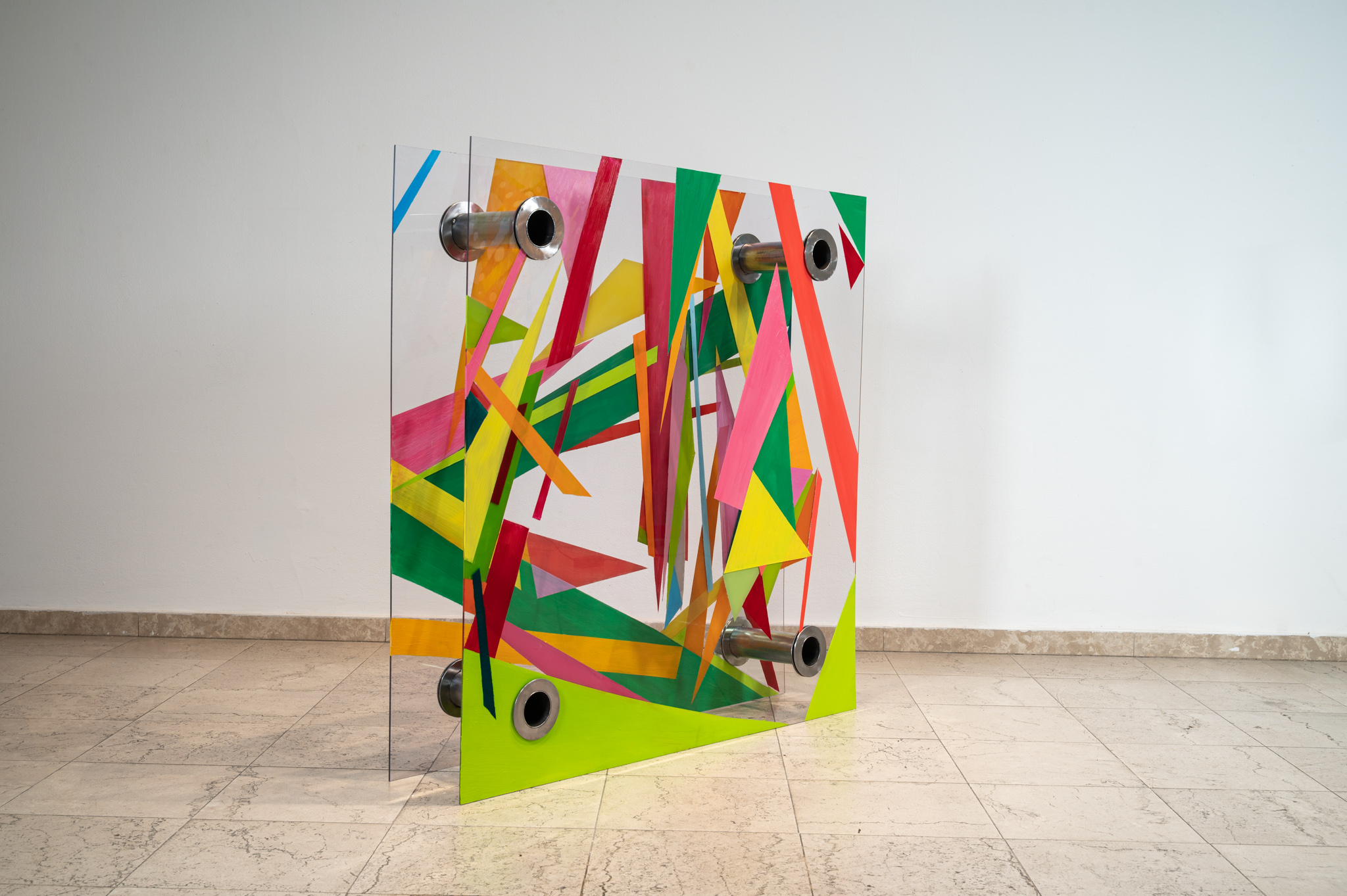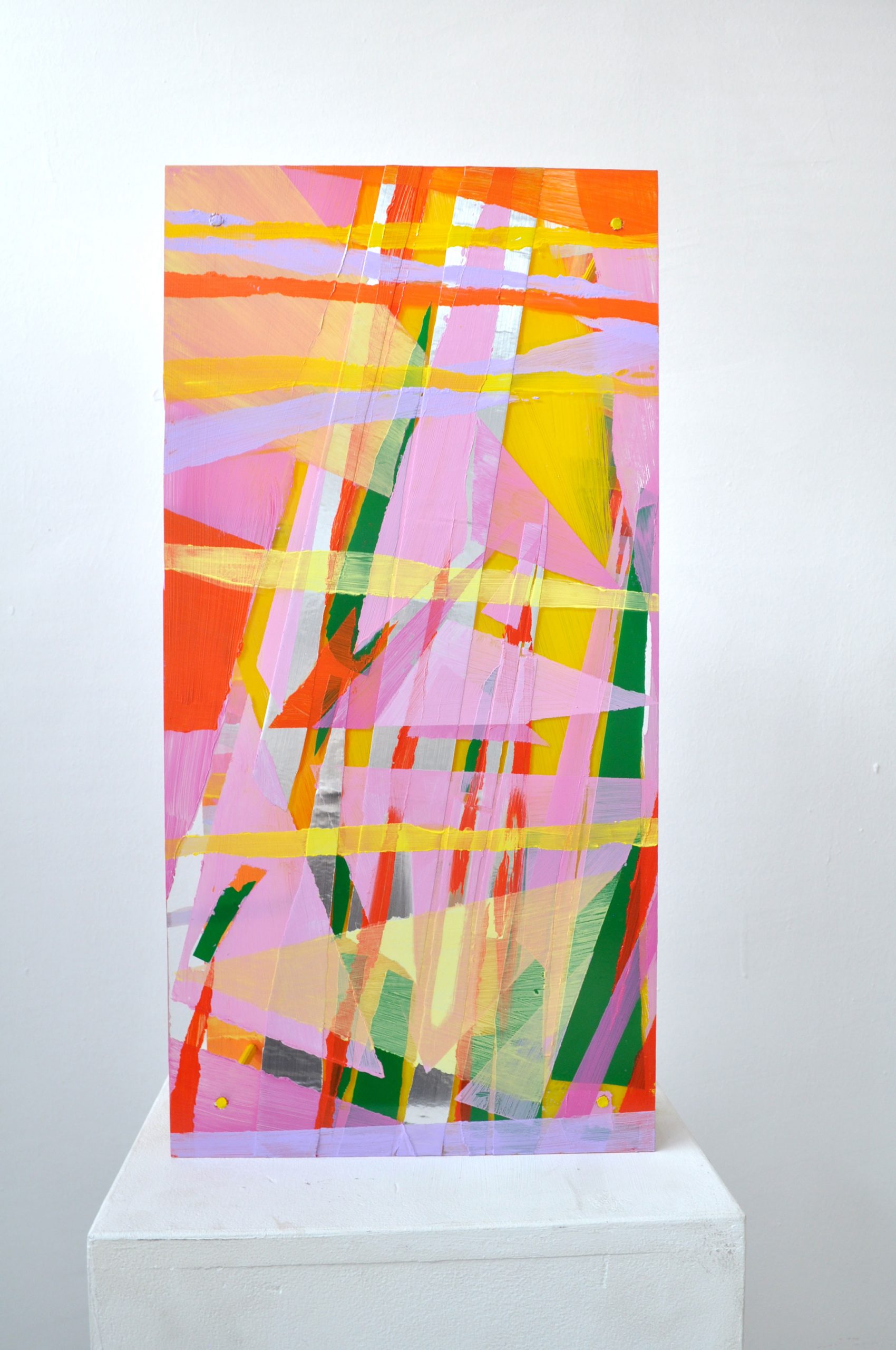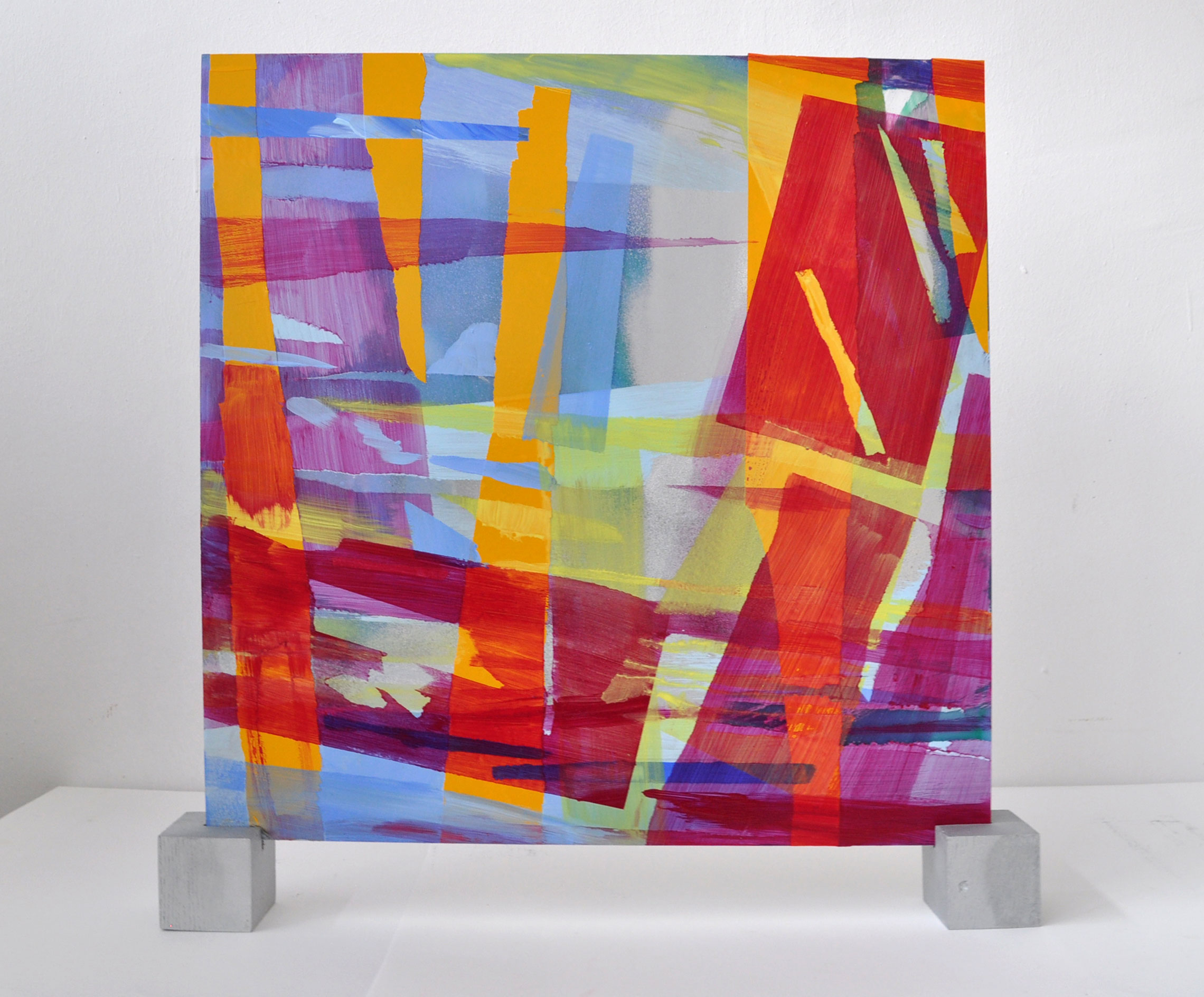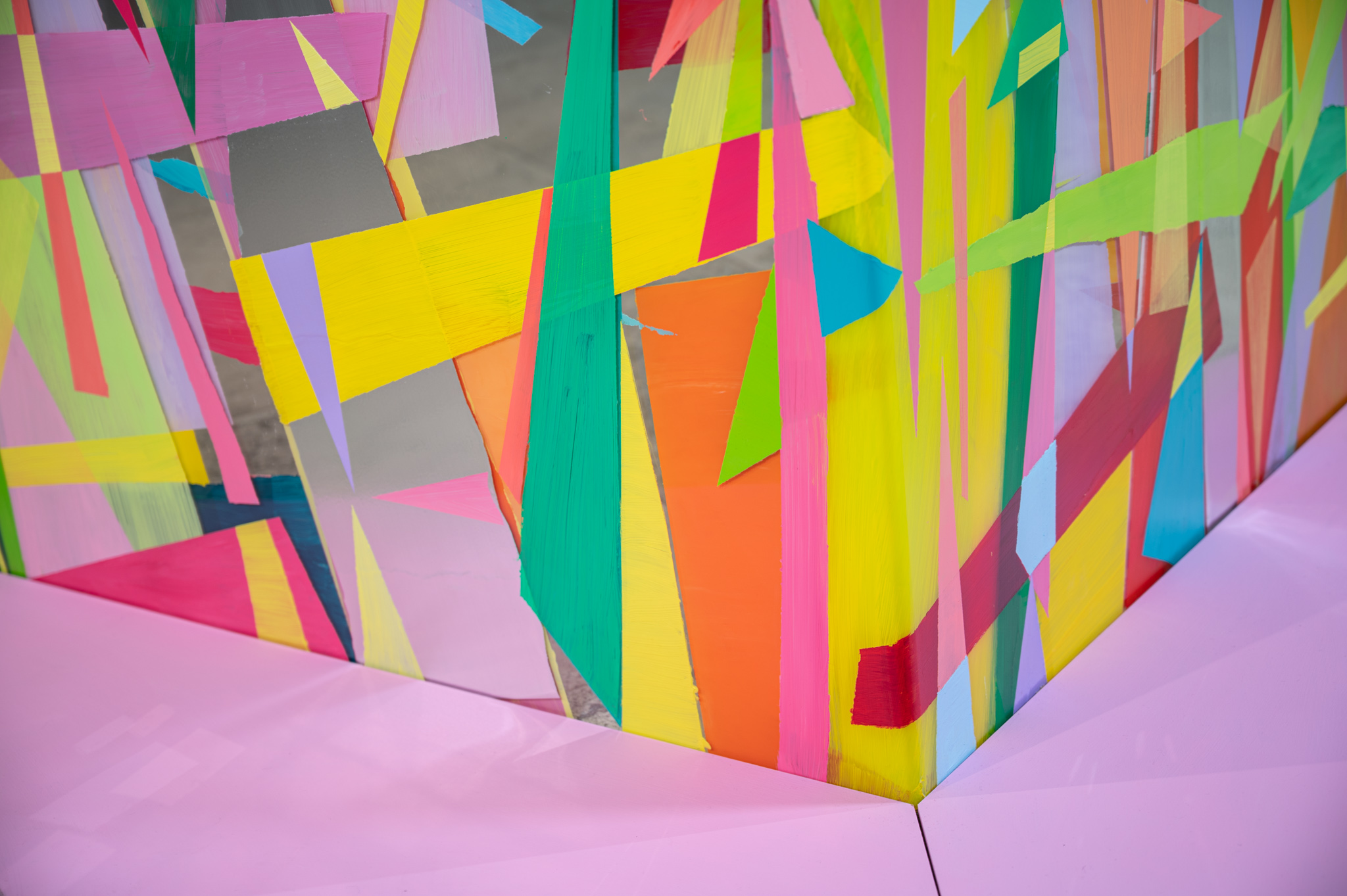
Focusing on the material of painting in general and to some point questioning the surface tradition of painting, Gergana started her last series of works that expand the boundaries and capabilities of painting as a visual language across form and partly materiality. The topic of transforming painterly impressions into three-dimensional space has become central to Gergana’s practice. In this direction took her the desire and curiosity to exit the widespread perception of painting as an object of art in which the use of paint on canvas is essential. At the same time, these typical technical features set the specifics in her conceptual and technical exploration. The paint is again preserved as an essential and main material which brings the color to the viewer. The canvas with its dialogical character of three-dimensional object and two-dimensional surface encourages the relocation of the picture plane from the wall into space. Consequently, the more traditional materials are replaced by not quite typical ones in the artist’s last works. Materials at first glance external to painting such as wood, plastic and their correlation become central to Gergana’s demand for new ways of presenting the painterly impression. Her last works are substantial, abstract, and frequently function as both painting and sculpture.
In artist’s working process the three-dimensional image of the objects is clarified in advance. The objects are built mainly through separate planes and interaction of different materials. The compositional decision of the colored elements and shapes remains spontaneous. The forms look as if they were sprinkled on the surface of the plane. To enhance this feeling, Gergana chooses as a compositional elements abstract, often geometric, shapes that set the clearest and spontaneous perception of color.
The artist incorporated the collage technique into these artworks to focus on the meaning of the material and to highlight the new quality that it has brought to art. Through combining the image of two or more surfaces Gergana is trying to achieve a third, new and not perfectly fixed vision which manifests the principle of collage.
The artworks retain the importance of the plane as immanent to painting. On one hand, the planes in the works can be perceived as a two-dimensional surface through the central viewer’s gaze. On the other hand, the planes can be considered in relation to their whole volume in real space, in the three-dimensionality of the work itself. The contradiction between the three-dimensionality of the objects and the compositional color decisions on the surfaces aims to create a feeling of ambiguity. To some extent, it also recreates the conflicts that arise between two-dimensional and three-dimensional features in the nature of painting.